
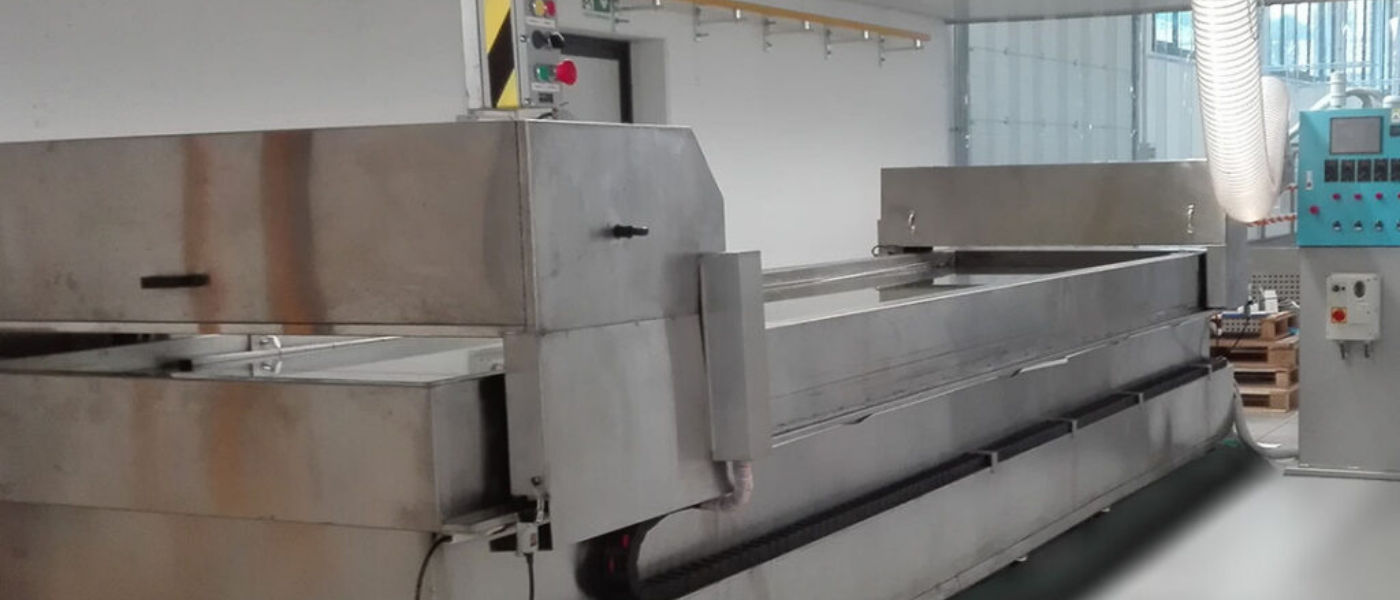
Hydrographics Tank
The hydrographics tank, also known as water transfer printing or hydro dipping, is an essential tool for applying three-dimensional printed graphics onto complex surfaces. Here is a detailed description of its components and operation:
Main Components
Tank Structure:
-
Material: Typically made of stainless steel to resist corrosion and facilitate cleaning.
-
Size: Varies depending on needs, but must be large enough to fully immerse the object to be decorated.
Heating System:
-
Function: Maintains the water at the optimal temperature (generally between 25°C and 30°C) to ensure proper activation of the hydrographic film.
-
Components: May include electric heaters and a thermostat for precise temperature control.
Water Filtration and Circulation System:
-
Function: Removes film and activator residues from the water to keep it clean and ready for subsequent use.
-
Components: Circulation pump and filters.
Supports and Grids:
-
Function: Can be used to hold the film in position on the water surface and facilitate the immersion of the object.
-
Components: Adjustable nets or grids.
Activator and Sprayers:
-
Function: The chemical activator is sprayed onto the film to dissolve the water-soluble carrier, leaving only the floating ink on the surface.
-
Components: Manual or automatic sprayers for even distribution of the activator.
Operation of the Tank
-
Water Preparation: Fill the tank with water and heat it to the desired temperature.
-
Film Placement: Cut the hydrographic film to the required size and carefully place it on the water surface, where it will float and soften.
-
Activator Application: Once the film is properly spread on the water, spray the activator. This step is crucial to dissolve the film’s carrier and activate the ink.
-
Object Immersion: Slowly immerse the object into the tank through the activated film. The graphic wraps around the object, adhering perfectly to its surface.
-
Removal and Rinsing: After immersion, remove the object from the tank and rinse to eliminate any remaining activator and unused film.
-
Drying and Finishing: Dry the object and optionally apply a clear coat to protect the decoration and enhance durability.
Considerations
-
Safety: It is important to follow safety regulations, especially when handling chemical activators.
-
Maintenance: The tank requires regular cleaning to keep the water clean and the components in good condition.
-
Quality of Film and Activator: Using high-quality materials ensures better results and longer-lasting decorations.