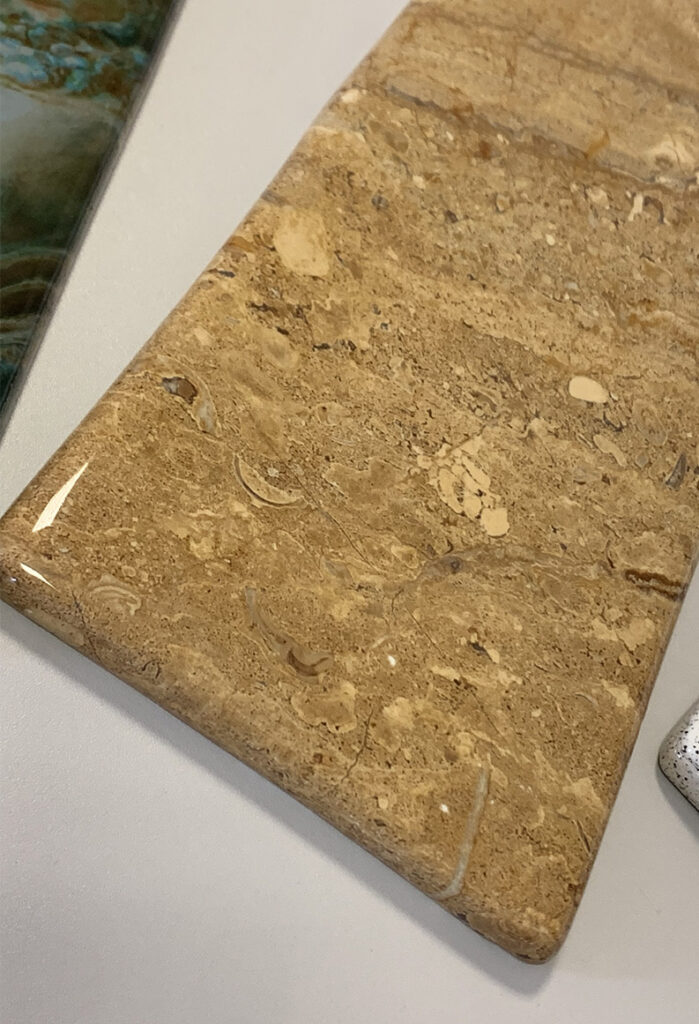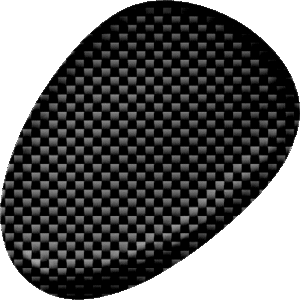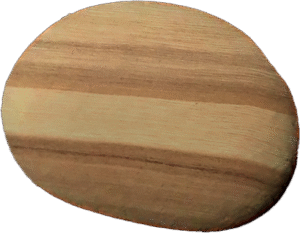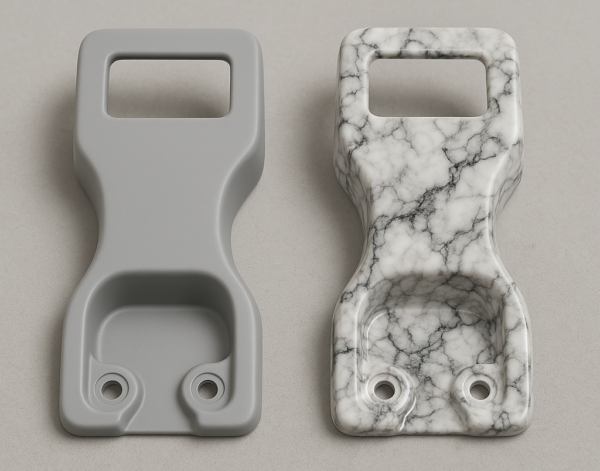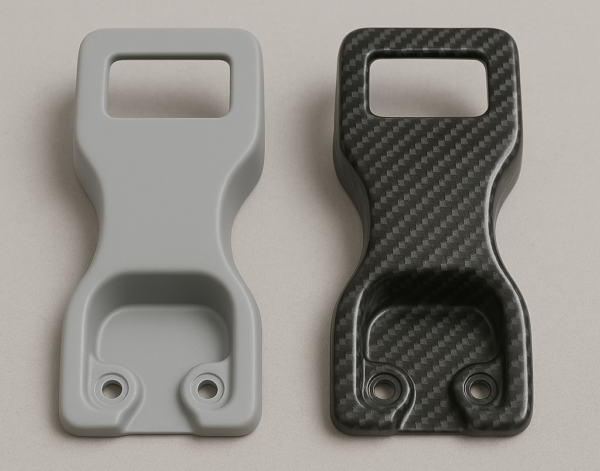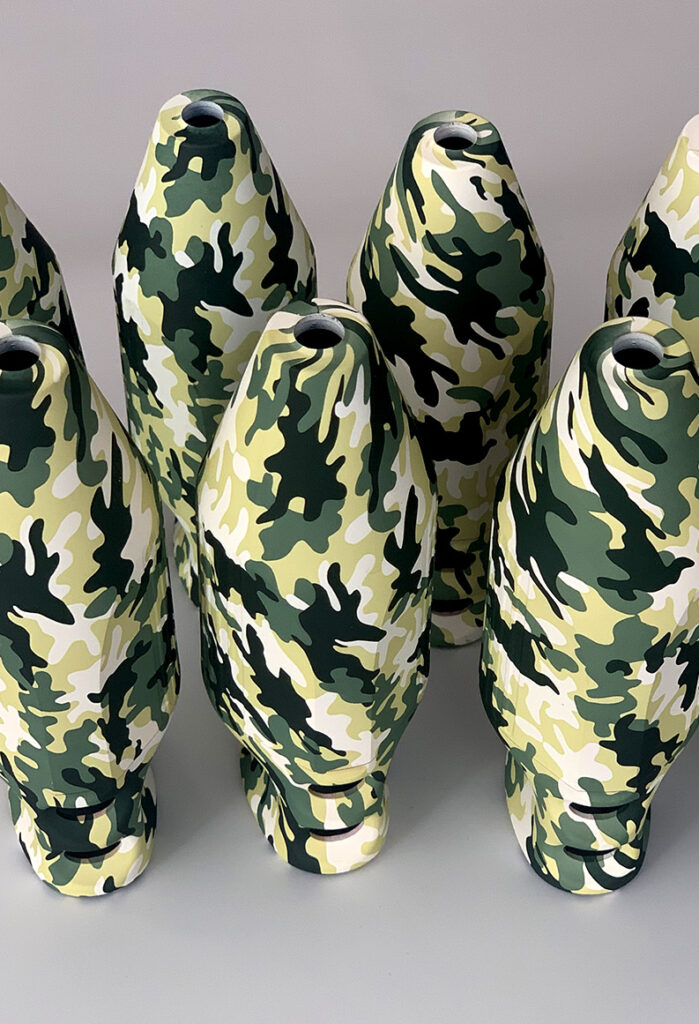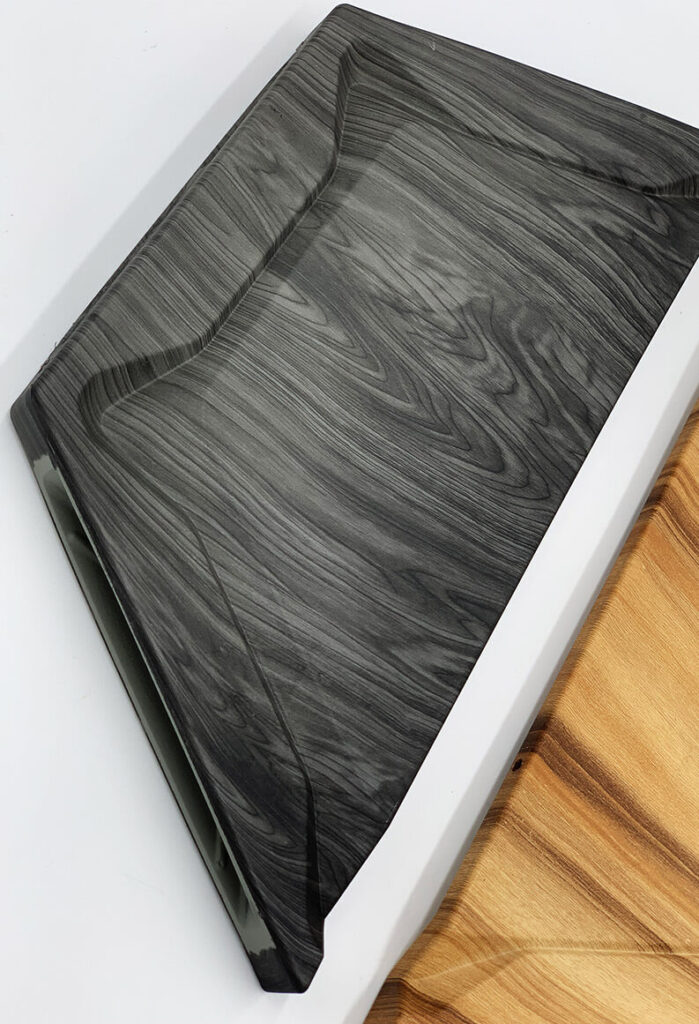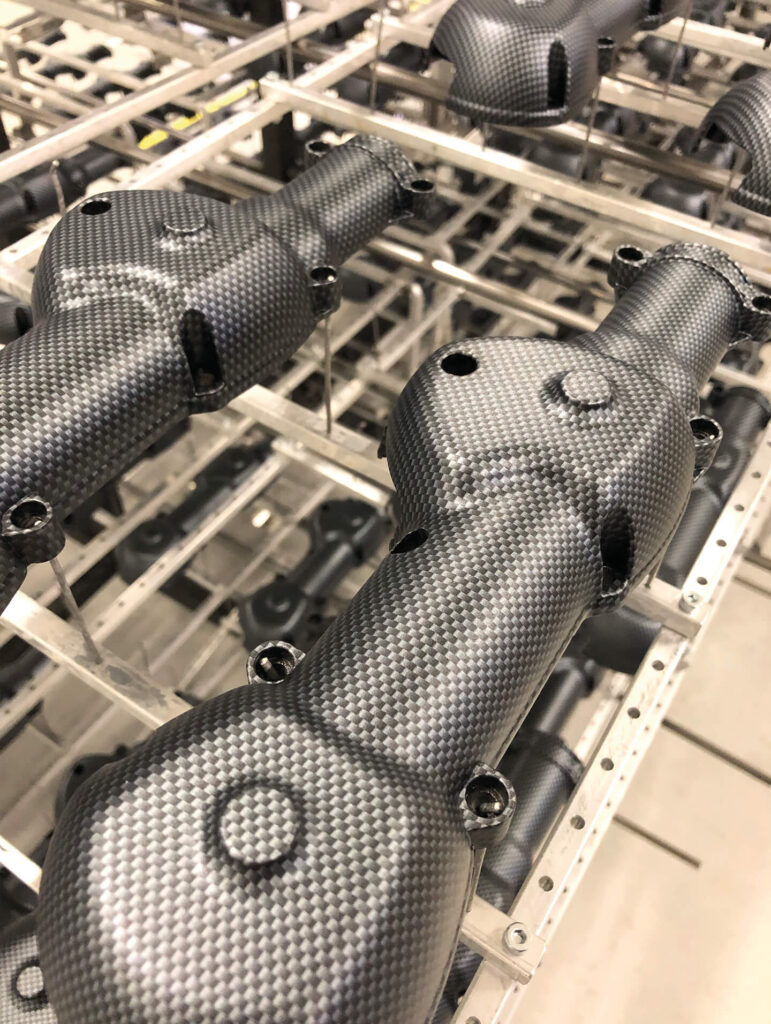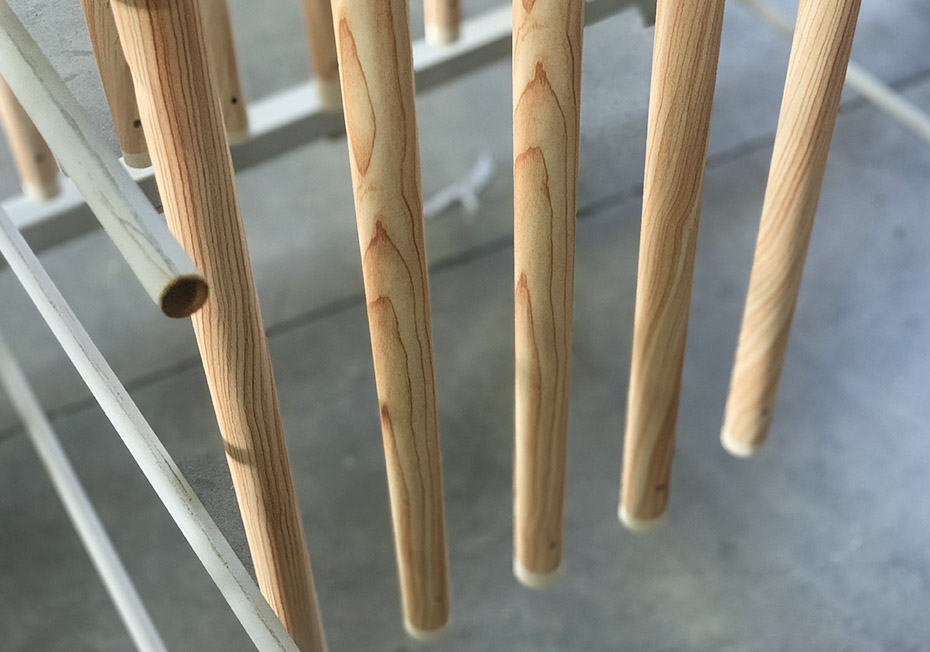
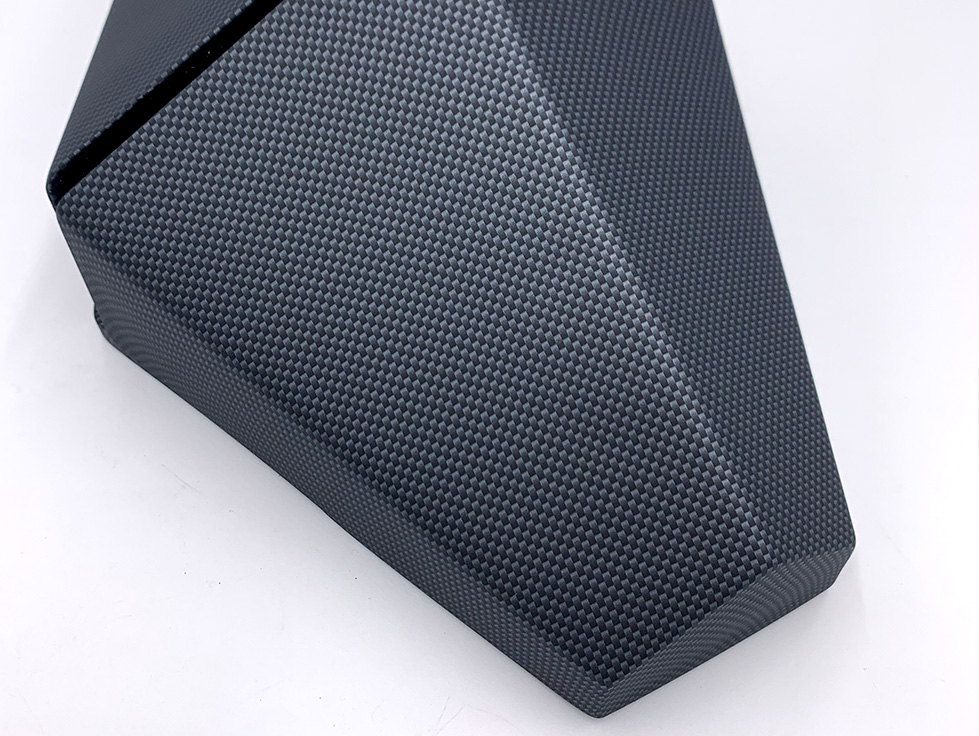
The industrial hydrographics process consists of the following stages:
Surface Preparation: This stage can vary greatly depending on the type of material composing the object to be decorated. Generally, the product is cleaned, then a base coat is applied using spray painting, followed by a specific primer for hydrographics. At this point, the object is ready for the decoration phase.
Immersion Decoration: This stage begins with the placement of a special film onto a dedicated hydrographics tank filled with water at a temperature-controlled setting. Once carefully laid on the water surface, the film is activated with a special liquid known as the Hydrographic Activator, which allows the colors and patterns on the film to perfectly adhere to the surface of the component that will be immersed next. The object is then immersed, and thanks to the hydrostatic pressure of the water, it is decorated with the permanent transfer of the graphic, even in hard-to-reach areas. After immersion, a rinsing phase with water jets removes any remaining film residues from the transfer, followed by a low-temperature drying phase to fix the graphic.
Application of Protective Clear Coat: The final stage of the production cycle involves liquid coating with a protective clear finish, also called a topcoat. This provides an additional enhancement of the aesthetic effect as well as significant resistance to mechanical and chemical stress.