
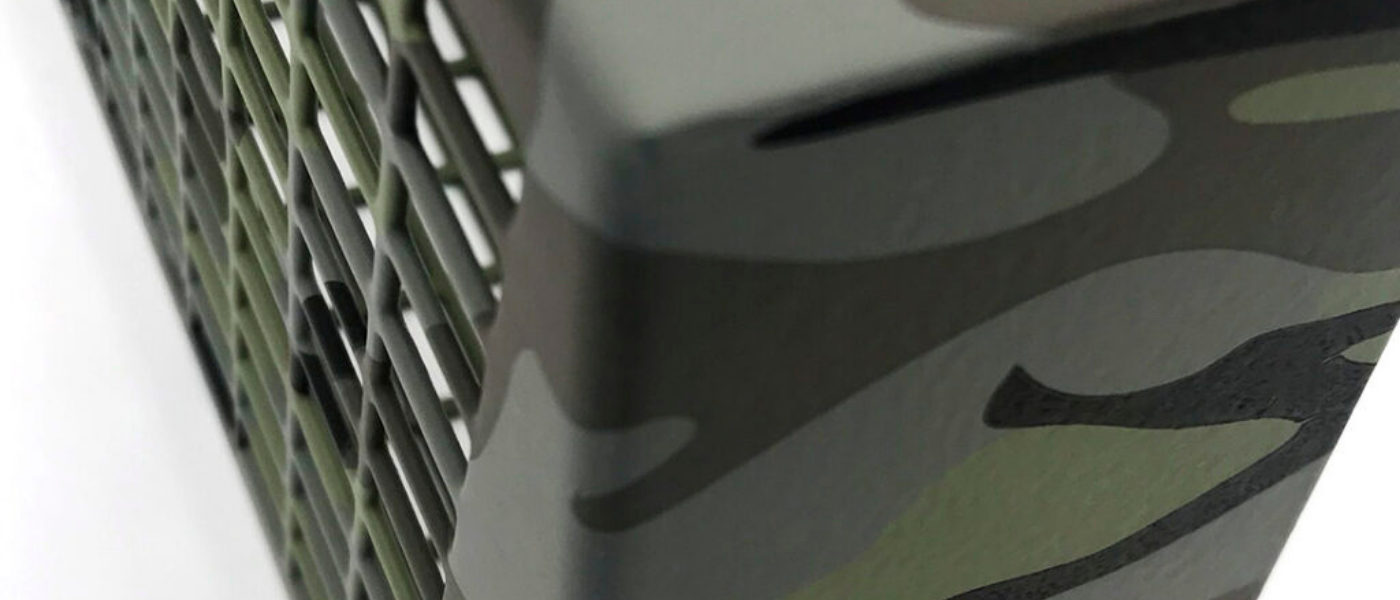
What is camouflage painting or camouflage-effect hydro dipping?
Camouflage painting is a painting process mainly used in the military and hunting fields to make objects or vehicles less visible to the human eye or to camouflage them in the surrounding environment. This technique is often used to conceal military vehicles, firearms, tactical equipment, and clothing, so that they blend better into the surrounding environment and are less visible to potential observers.
Camouflage painting or camouflage-effect hydro dipping usually involves the application of specific colors and patterns that adapt to the environment in which the object or vehicle will be used. For example, in a forest environment, a combination of dark greens and browns may be used to better camouflage the object among trees and vegetation. In a desert environment, a sand or light brown color may be used.
Camouflage finishes can vary according to specific needs and environmental conditions. Some camouflage designs are based on lines and geometric shapes to create a disruptive effect, while others are based on more natural representations of the environment, such as leaves or rocks.
This process can be carried out using different paint application techniques, including spraying, brushing, and dip impregnation (hydro dipping). In addition, different types of paints can be used, including water-based paints or solvent-based paints, depending on specific resistance and durability requirements.
In summary, camouflage painting is a painting technique aimed at making objects or vehicles less visible in the surrounding environment, adapting colors and patterns based on environmental conditions. This process is widely used in the military and hunting fields to improve stealth and camouflage of objects.