
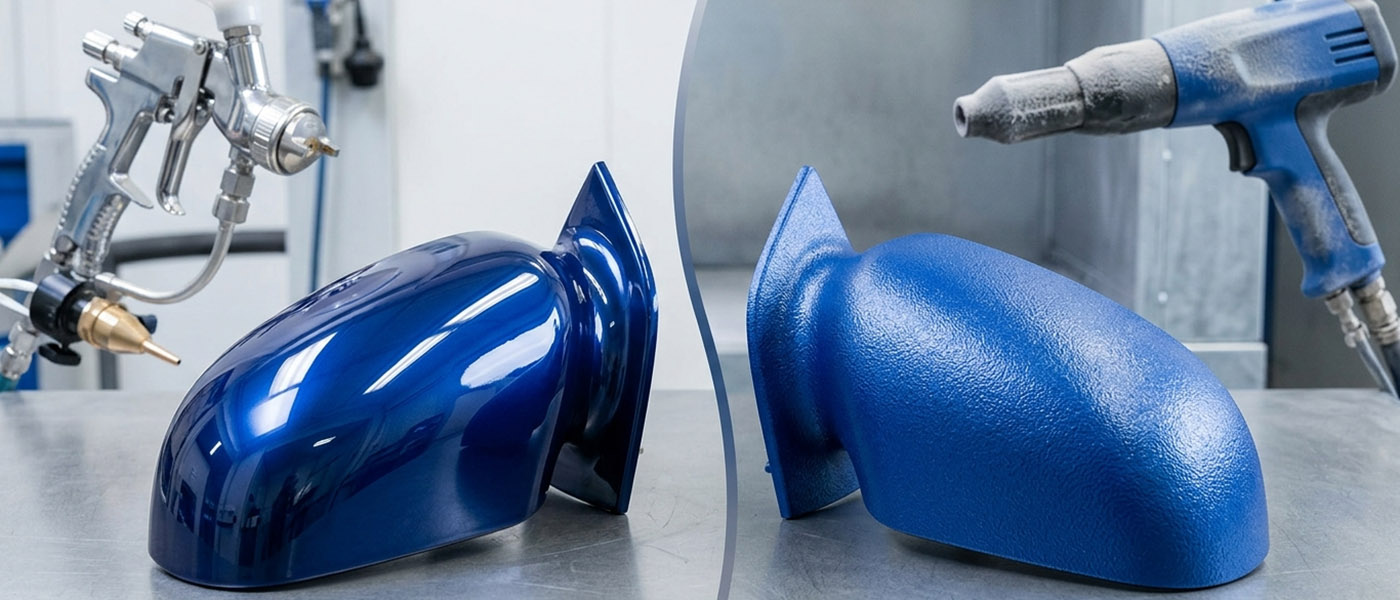
Liquid Painting vs Powder Coating
When it comes to industrial and handcrafted finishes, the choice of coating determines not only the appearance, but also the functionality and precision of the final component. Although powder coating is a common solution, liquid painting remains the benchmark for those seeking versatility, flawless finishes, and tailored protection.
In this article, we’ll explore why, for many high-end industries, liquid painting represents the superior solution compared to powder coating.
The 4 Exclusive Advantages of Liquid Painting
Choosing liquid painting does not simply mean applying color — it means selecting an advanced coating system that delivers benefits powder coating cannot achieve.
1. Unmatched Aesthetic Finish and Gloss
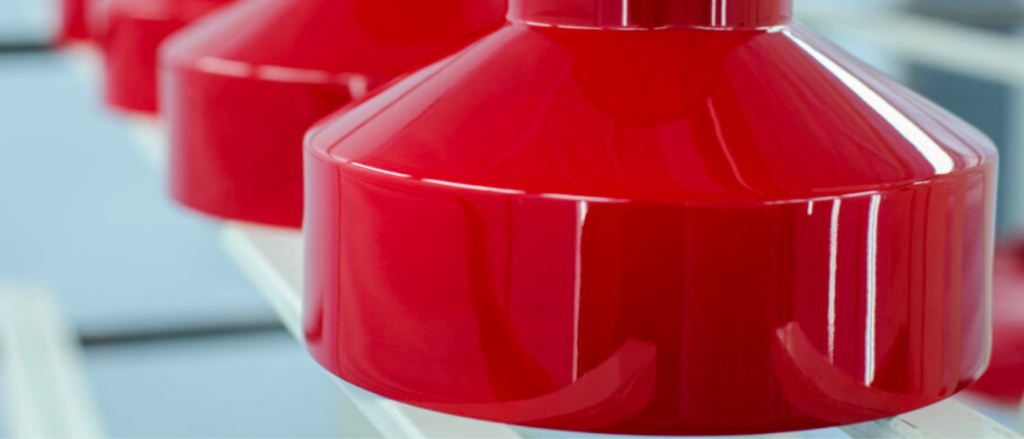
The main limitation of powder coating is the so-called “orange peel effect,” a slight surface texture or granularity. Liquid painting, on the other hand, allows for perfectly smooth, glossy, mirror-like, or matte surfaces with exceptional color depth. It is the preferred choice for the design, furniture, and luxury sectors.
2. Precision and Controlled Film Thickness
In mechanical or precision components, every micron matters. While powder coating creates thicker layers that can alter tolerances and threads, liquid painting allows for ultra-thin and uniform coatings, ensuring the component maintains its original dimensions without compromising protection.
3. Complete Versatility Across Materials
Powder coating requires curing temperatures close to 200°C, limiting its use to heat-resistant metals only. Liquid painting is universal and can be successfully applied to:
- Metals and lightweight alloys
- Plastics and composite materials
- Wood and wood-based materials
- Glass
4. Unlimited Color Customization and Easy Touch-Ups
Unlike powder coating (produced in standard batches), liquid painting offers virtually unlimited color mixing possibilities. We can create custom-matched colors, metallic finishes, pearlescent effects, or soft-touch coatings tailored to specific requirements.
In addition, accidental scratches or damage can be repaired locally with seamless touch-ups — something that is nearly impossible with powder coating, which often requires complete stripping and recoating of the entire component.
Comparison Table: Liquid Painting vs Powder Coating
| Feature | Liquid Painting (Premium) | Powder Coating (Standard) |
|---|---|---|
| Aesthetic Quality | Excellent / Smooth | Good / Orange Peel Effect |
| Color Range | Unlimited and Customizable | Limited to Standard Catalog |
| Applicable Materials | Universal (Metal, Plastic, Wood) | Heat-Resistant Metals Only |
| Precision (Thickness) | High Precision (Thin Film) | Thicker and Less Precise Layers |
| Touch-Ups and Repairs | Easy and Invisible | Very Difficult / Requires Recoating |
When Is Liquid Painting Essential?
There are applications where powder coating is simply not sufficient. Our liquid painting technology is the ideal choice for:
- Precision Industrial Components: where tight tolerances are essential.
- Design and Furniture: where touch and appearance demand a flawless, silky surface.
- Automotive and Marine Industries: for maximum durability combined with premium aesthetics.
- Restoration and Prototyping: thanks to its adaptability to single parts and complex geometries.
Conclusion: Why Choose Our Liquid Painting Services?
If powder coating is a “mass-market” solution, liquid painting is a premium choice that combines artisanal quality with industrial technology. It offers long-lasting protection, complete aesthetic control, and the ability to work on virtually any substrate.
Want to enhance the value of your products with a superior finish? Contact us today for a customized quote and discover how our liquid painting solutions can make a difference for your business.