
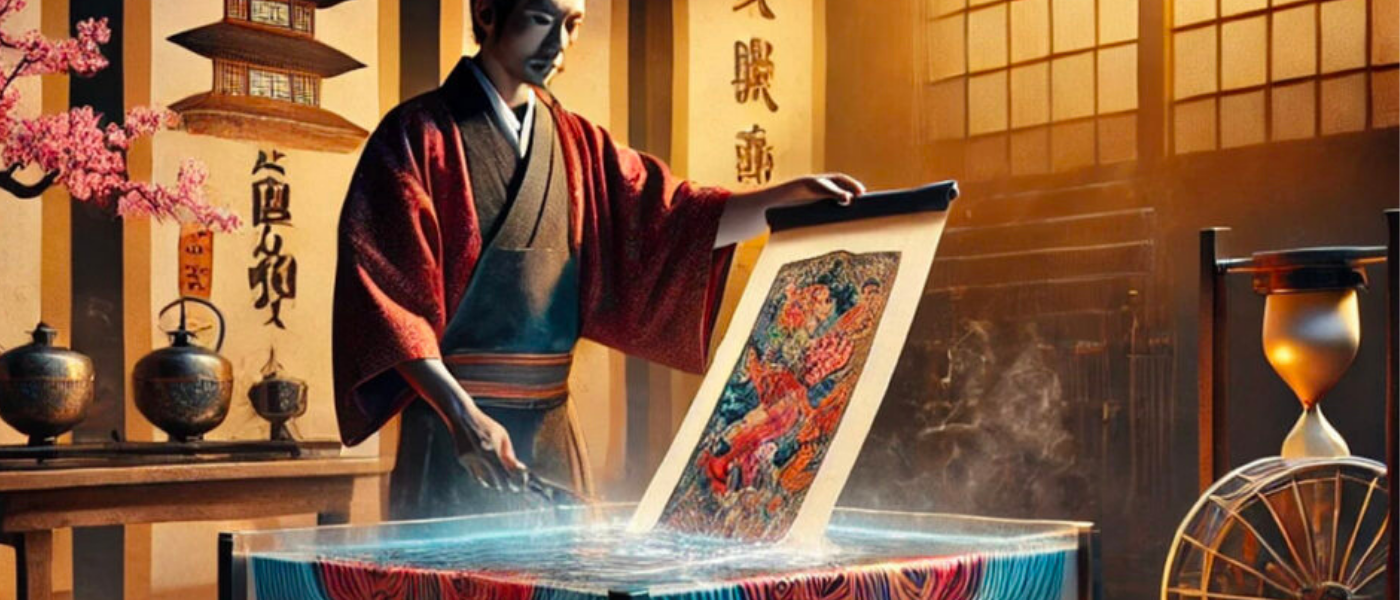
Origins and History of Hydrographic Printing: A Journey into the Japanese Roots of a Revolutionary Technique
Hydrographic printing, also known as water transfer printing or immersion printing, is an innovative decorative technique that has revolutionized the world of industrial customization. Its appeal lies in the ability to apply patterns and textures to three-dimensional surfaces of various materials, such as plastic, metal, wood, and glass. But where did it all begin? Let’s explore the history and evolution of this extraordinary technology.
The Japanese Roots of Hydrographic Printing
The origins of hydrographic printing trace back to Japan in the 1970s, when Japanese companies began developing new decorative techniques to enhance the aesthetics of industrial products. It was during this period that the first immersion printing method was patented, marking the start of a revolution in surface finishing.
The concept behind hydrographic printing emerged from the need to decorate complex surfaces—like those of automobiles and design objects—without compromising their functionality. The technique was refined and developed in Japan, where precision and attention to detail have always played a key role in technological innovation.
The Evolution of Hydrographic Printing Over Time
In the 1980s, hydrographic printing started to spread beyond Japan, finding applications in various sectors including automotive, electronics, furniture, and fashion accessories. The ability to reproduce realistic patterns such as carbon fiber, wood, marble, or camouflage made it especially appealing to companies seeking high-quality aesthetic finishes.
With technological advancements, hydrographic printing processes were optimized through high-performance films and advanced protective coatings, making the method even more durable and versatile. Today, hydrographic printing is used globally, offering endless customization possibilities for both companies and individuals.
The Importance of Hydrographic Printing in the Modern Market
Hydrographic printing is now regarded as one of the most versatile and innovative decoration techniques, with applications ranging from the automotive industry to the customization of everyday objects. Its ability to transform any surface into a work of art makes it a preferred choice for those seeking unique and striking designs.
Conclusion
The Japanese origins of hydrographic printing tell a story of innovation and creativity that has made this technique a benchmark in industrial decoration. With the ongoing development of new materials and technologies, the future of hydrographic printing looks more promising than ever, offering exciting opportunities for design and customization.
Interested in hydrographic printing for your projects? Contact us to discover all the possibilities offered by this extraordinary technique!